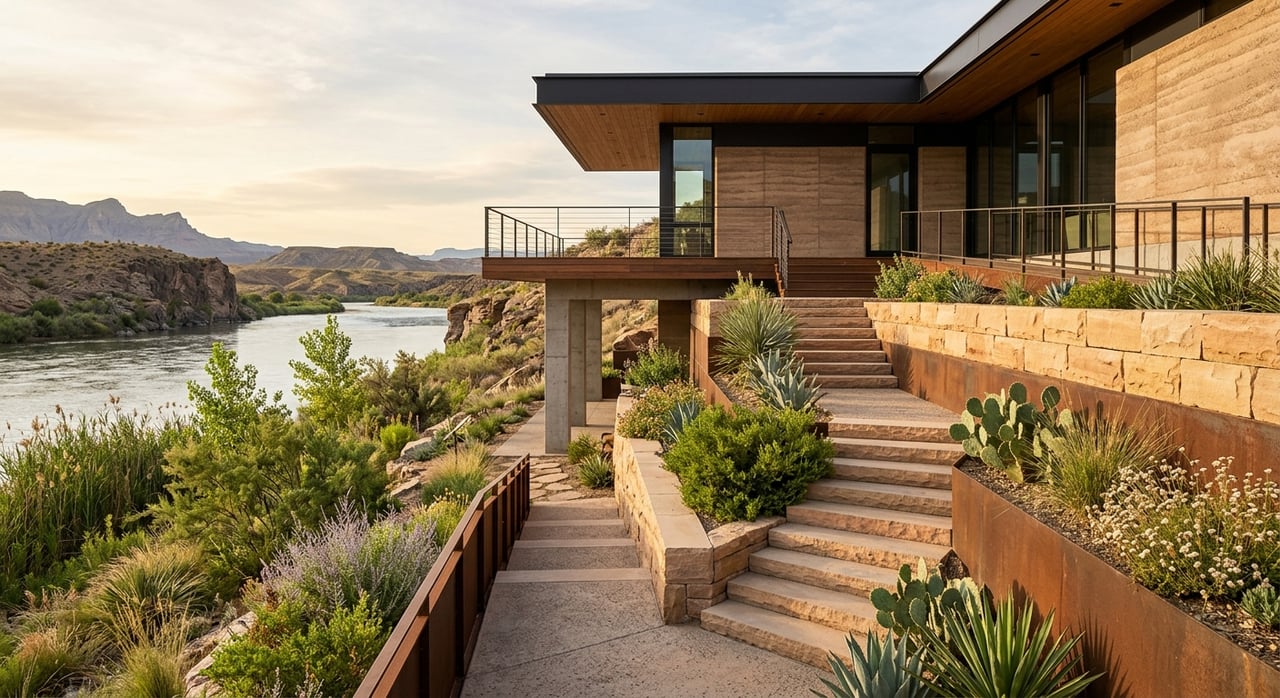
If you are dreaming about waking up to Colorado River views in Mohave Valley, you are not alone. Riverfront homes here offer a lifestyle that feels both relaxed and hard to replicate, but they also come with extra layers of review that many buyers do not expect. Before you fall in love with a dock, seawall, or stretch of shoreline, it helps to understand how floodplain rules, permits, utility service, and parcel location can shape what you can actually do with the property. Let’s dive in.
Why Mohave Valley riverfront homes need extra review
Mohave Valley sits in a part of the Colorado River corridor that Mohave County identifies as one of its sustained growth areas. At the same time, the river is a major water source and recreation asset, which means riverfront parcels often face more oversight than inland homes. According to the Mohave County General Plan, FEMA floodplains are mapped throughout the county, and the Colorado River is the county’s one designated floodway.
That matters because the rules for a riverfront parcel are not just about the home itself. They can affect additions, grading, shoreline improvements, financing, and insurance. In other words, buying the right riverfront property is often about understanding the land as much as the lifestyle.
Start with parcel location and jurisdiction
One of the first things to confirm is exactly where the property sits from a jurisdiction standpoint. In the Mohave Valley corridor, a home may be in unincorporated Mohave County, within another governing boundary, or on or near tribal land. The approval process can change in a meaningful way depending on that location.
Mohave County explains in its flood awareness guidance that buyers should verify whether a parcel is in unincorporated county area, inside a city boundary, or on or adjacent to tribal land before moving forward with plans. This is especially relevant in Mohave Valley because the Fort Mojave Indian Reservation occupies part of the river corridor, as noted in the county’s general plan.
Why jurisdiction changes the process
Jurisdiction affects which office reviews floodplain issues, development questions, and certain shoreline improvements. It can also affect whether tribal approvals are required in addition to county, state, or federal review.
For you as a buyer, this means due diligence should begin before you plan renovations or estimate improvement costs. Two neighboring properties can look similar from the water and still follow different approval paths.
Check zoning before you price improvements
Zoning is one of the most important items to review early. Mohave County Planning and Zoning administers the county zoning ordinance and subdivision rules, and the county’s Planning and Zoning Division notes that parcels may fall into residential, recreation, agricultural, commercial, or special development districts.
For a riverfront buyer, zoning can shape how the property may be used and what setbacks or development standards apply. If you are considering an addition, guest space, accessory improvements, or major outdoor upgrades, the parcel’s exact zoning should be part of your review long before closing.
Floodplain status is a major buying factor
In Mohave Valley, floodplain review is often the biggest practical issue for riverfront homes. Mohave County states on its flood zone resource page that every property is in a flood zone, and Special Flood Hazard Areas include Zone A, AO, AE, and AH.
The county also applies a standard that goes beyond the Base Flood Elevation. It requires an extra 1 foot above Base Flood Elevation as the Regulatory Flood Elevation. For buyers, that can affect what is allowed for new construction or substantial improvements.
Floodway vs. floodway fringe
For Colorado River parcels, Mohave County uses a separate Colorado River Floodway and Floodway Fringe framework under its Flood Control Ordinance. That distinction is critical.
In the floodway, encroachments such as fill, new construction, and substantial improvements are generally prohibited. Some limited compatible uses, including docks and boat launching ramps, may be considered only through the required review process and with Bureau of Reclamation concurrence.
In the floodway fringe, permanent structures may be allowed, but the lowest floor must be at least 1 foot above the Colorado River Base Flood Elevation. That means two homes on the same stretch of river may not have the same improvement potential.
Permits and map tools to review
Mohave County says on its floodplain permitting page that a Floodplain Use Permit is required for changes in a Special Flood Hazard Area, including new construction, additions, grading, and solid walls or fencing. The county also requires an Elevation Certificate for new buildings and substantial improvements in Special Flood Hazard Areas.
You can also use county map tools and FEMA resources to verify the parcel before you remove contingencies. FEMA’s Flood Map Service Center is the official flood map source.
Flood insurance can affect financing
Flood-zone status is not only about construction rules. It can also affect your monthly ownership costs and your loan process.
FEMA states through its flood map resources that lenders generally require flood insurance for buildings in Special Flood Hazard Areas when the mortgage is federally regulated or government-backed. If you are financing a riverfront purchase, it is smart to discuss flood insurance early so you have a realistic picture of total carrying costs.
Riverfront does not always mean dock rights
This is one of the biggest misconceptions buyers have. Owning a riverfront home does not automatically give you unrestricted rights to build, expand, or replace shoreline features.
On the Arizona side, the Arizona State Land Department dock and launch permit application says the state owns land under the Colorado River from its centerline to the ordinary high-water mark. It also makes clear that the state permit is separate from other approvals and does not by itself authorize encroachment on navigable waters.
Dock and shoreline rules to know
The U.S. Army Corps of Engineers lays out key guidance in its Colorado River permit guidelines. The Corps says permits are required for docks, piers, swimming platforms, ramps, retaining walls, beach work, dredging, buoy placement, and other work below or across the ordinary high-water mark.
The same guidelines note several practical limits buyers should know:
- Permits are issued to the lot owner
- Structures cannot deny adjacent owners riverfront access
- Docks generally may not extend more than 25 feet from the ordinary high-water mark or retaining wall, whichever is less
- Only one dock per owner or contiguous lots is typically considered
- Slips are generally not eligible unless part of a community dock or authorized marina
The Corps also notes that new Arizona docks need Arizona State Land Department approval if any portion, including pilings, attaches to state land. It lists a $500 mitigation fee for new boat docks and says the permit process usually takes 6 to 8 weeks.
In addition, the Arizona State Land Department lists a Non-Commercial Sovereign Land Boat Dock and Launch Ramp Permit fee of $100. In practical terms, a shoreline project may require county floodplain review, Corps authorization, and a separate state permit.
Tribal land can add another layer
Because the Fort Mojave Reservation runs along part of the river corridor in this area, some parcels may involve added review considerations. The Corps states in its Colorado River guidelines that projects on tribal land must be approved by the appropriate tribe.
For buyers, this is another reason to confirm parcel location early. If the property is on tribal land or affected by tribal boundaries, the path for shoreline work or other improvements may differ from what you would expect on a standard county parcel.
Verify water and sewer service carefully
Utility service is another area where assumptions can cause problems. Mohave Valley does not always function like a typical suburban subdivision with one clear provider for everything.
The Mohave Valley Irrigation and Drainage District says it was formed in 1963 and sits along the Colorado River between Bullhead City and Needles. It also notes that it has the right to subcontract its Colorado River entitlement to entities and individuals within its service area, excluding tribal reservation lands.
The Arizona Department of Water Resources states in its rural water groups overview that the Colorado River is the river communities’ only source of water and that there is no groundwater backup. That makes it especially important to verify the exact water provider, service area, and any connection or allocation requirements before you close.
Sewer service may vary by address
Mohave County’s general plan notes that numerous small, privately operated sewer districts exist in Mohave Valley. Buyers should not assume that a riverfront home is connected to the same type of sewer service as a nearby neighborhood.
Before closing, confirm whether the property is served by sewer, septic, or a district system. You should also ask who is responsible for ongoing maintenance, repairs, and future upgrades.
Access and daily convenience still matter
Lifestyle is a big reason buyers are drawn to riverfront property, but day-to-day convenience should still be part of the decision. Mohave County notes in its general plan that State Highway 95 remains heavily congested through Bullhead City and Mohave Valley.
That does not change the appeal of river living, but it can affect drive times, errands, service calls, and emergency access depending on the address. When you compare homes, it is worth looking beyond the river view and thinking about how the location works for your everyday routine.
A smart due diligence checklist
If you want a cleaner path to closing, use a review sequence that matches how local and federal agencies divide responsibility.
Start with this checklist:
- Verify the parcel location and jurisdiction
- Confirm the zoning classification
- Review county and FEMA flood maps
- Determine whether the lot is in the floodway, floodway fringe, or Special Flood Hazard Area
- Ask the title company for easements, rights of way, and recorded shoreline restrictions
- Confirm water provider and sewer or septic service
- Price out docks, ramps, retaining walls, or other river improvements only after those items are verified
This approach aligns with Mohave County floodplain guidance and helps you avoid spending time and money on plans that may not be feasible.
Common mistakes buyers make
Most riverfront buying mistakes in Mohave Valley come from assumptions. The property may look straightforward, but the legal and physical details often tell a more complete story.
Some of the most common issues include:
- Assuming riverfront ownership automatically includes dock rights
- Overlooking floodway restrictions on fill, construction, or major improvements
- Missing the county’s 1-foot freeboard requirement above Base Flood Elevation
- Forgetting to budget for flood insurance during financing
- Failing to verify whether tribal or state approvals are needed
- Assuming nearby homes have the same water or sewer setup
A careful review upfront can help you avoid delays, unexpected costs, and disappointment after closing.
Buy with clarity, not guesswork
A riverfront home in Mohave Valley can offer an exceptional Colorado River lifestyle, but the best purchases are the ones backed by clear due diligence. When you understand floodplain status, shoreline permitting, utility service, and parcel jurisdiction before you commit, you can move forward with more confidence and fewer surprises.
If you are considering a riverfront purchase and want local guidance tailored to the Colorado River corridor, connect with US Southwest Luxury. You will get a polished, client-first advisory experience grounded in local knowledge, strategic insight, and a seamless path from search to closing.
FAQs
What should you check first when buying a riverfront home in Mohave Valley?
- First, confirm the parcel’s exact location and jurisdiction, since approvals can change depending on whether the property is in unincorporated Mohave County, near tribal land, or subject to other governing boundaries.
Does a Mohave Valley riverfront home automatically include dock rights?
- No. Riverfront ownership does not automatically allow unrestricted dock or shoreline improvements, and projects may require county review, U.S. Army Corps authorization, and Arizona State Land Department approval.
How do flood zones affect a riverfront purchase in Mohave Valley?
- Flood-zone status can affect what improvements are allowed, whether a Floodplain Use Permit is needed, elevation requirements for structures, and whether your lender will require flood insurance.
What is the difference between the Colorado River floodway and floodway fringe?
- In general, the floodway is more restrictive and may prohibit fill, new construction, and substantial improvements, while the floodway fringe may allow permanent structures if elevation standards are met.
Why should you verify water and sewer service for a Mohave Valley riverfront property?
- Service arrangements can vary by address, and buyers should confirm the exact water provider, sewer or septic setup, and any maintenance or connection obligations before closing.